 01796262185

Understanding Hearing Aids for Those with Hearing Loss
Hearing aids now play a vital role in the lives of millions of people across the globe. They offer an essential solution for anyone who has lost their hearing and want to listen to the sounds they have missed, this in turn allows them to enhance their quality of life. But just what are hearing aids, and how do they work?
What is Hearing Aid?
Hearing aids are small, wearable devices that magnify sound, helping people with hearing loss to hear and communicate better. While such devices are meant to help people with all levels of hearing loss, from mild to profound, by amplifying sounds they might struggle to hear, some consumers can be embarrassed about using them for that purpose.
The Anatomy of a Hearing Aid
Although there are various types of hearing aids that can be designed to fit inside your ear canal in different ways, they all have the same basic components:
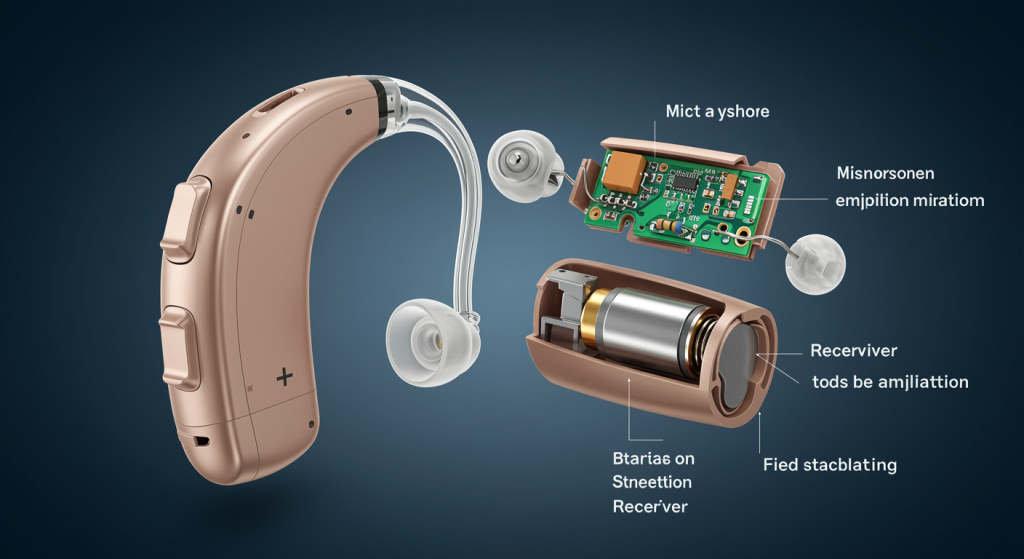
Microphone: The microphone captures ambient sounds such as speech, background noise, or other sounds.
Amplifier – The amplifier amplifies the volume of the sound signals obtained from the microphone. The degree of amplification can generally be modified according to the user’s preference and situation.
Receiver(Speaker): The receiver changes the amplified sound back into sound and sends it to the ear canal.
Batteries: Hearing aids need the juice to work and that usually comes from disposable or rechargeable batteries. Battery life may differ depending on the hearing aid and how it is used.
How Do Hearing Aids Work?
The primary purpose of a hearing aid is to amplify and clarify sound. When somebody speaks or there is a sound in the vicinity, the microphone of the hearing aid detects those sound waves. These acoustical waves are transformed into electrical signals and amplified. The amplified sound is then transmitted into the ear canal by the receiver for the user.
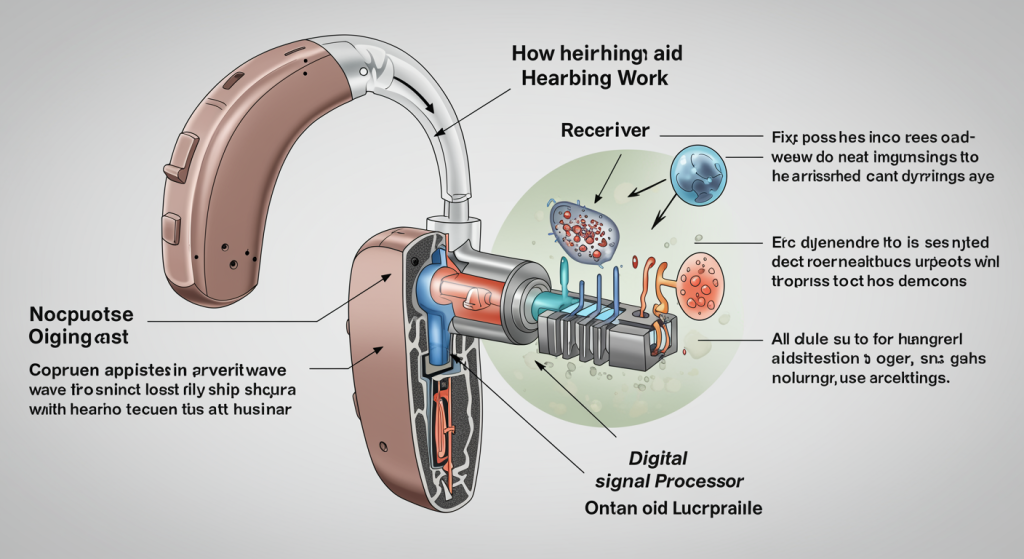
Contemporary hearing aids also incorporate sophisticated digital technology to analyze sound, eliminating background noise and sharpening your ability to understand speech. Certain types of hearing aids can block or mask out unneeded sounds — things like rustling, wind or ambient sounds — so the wearer can concentrate on valuable ones, such as a conversation.
Types of Hearing Aids
Hearing Aids: Styles of Available Products For comfort and style you can choose among hearing aid types:
Behind-the-ear (BTE): This is the most popular style. They rest discreetly behind your ear, and are attached a a very small custom ear canal rubber. BTE instruments are high-powered and able to accommodate extensive hearing losses.
In-the-Ear (ITE): These models sit entirely in the outer ear, which makes them more discreet than BTE models. They are commonly advised for people having mild or moderate loss of hearing.
Hearing aids available are In-the-Canal (ITC), Completely-in-the-Canal (CIC): They are smaller in size and are 2 types, the hearing aid goes partially or entirely into the ear canal. These are less obvious but may be fiddly for people with fine motor dexterity issues.
Receiver-in-Canal (RIC): They look like BTE aids but the receiver is smaller and located inside the ear canal rather than in the device behind the ear.
WHY DO PEOPLE WEAR HEARING AIDS?
Hearing aids are employed for people who have hearing loss either to the cause of age related hearing loss (presbycusis), ear infections, noise induced hearing loss, or genetic causes. They help to:
Improve Speech Clarity: When sounds are boosted, it becomes easier to keep up with conversations, even when it’s noisy.
Better Social Engagement: Users with enhanced hearing tend to be more socially active and maintain better relationships as well as connections.
Recover Lost Independence: Hearing aids prevent users from missing out on sounds — whether from the TV or stereo, a conversation, or a conference – while taking part to the fullest in everyday activities.
Enhance Your Mental Health: Untreated hearing loss can cause many to feel isolated or frustrated. As they enhance hearing, hearing aids can also help reduce the emotional toll associated with poor communication.
Benefits of Today’s Hearing Aids
Hearing aids have evolved to become stronger and more effective than ever. Some of the most notable advantages of modern hearing aids include:
Bluetooth Capabilities: Hearing aids like Bluetooth capabilities make it possible to hook up to smartphones, TVs and other devices and play sound directly through the hearing aids directly to the ear.
Rechargeable hearing aids: Many of today’s hearing aids have rechargeable batteries, so you do not have to change batteries regularly.
White Noise: Superior computerized technology does so much more than simply block out noise.
Personalization: Contemporary hearing aids are personalized, such as adjustable volume and frequency tuning and programmed listening modes best suited for various situations such quiet room to noisy surrounding.
How to Select the Right Hearing Aid
The best hearing aid for you will be based on the degree of hearing loss, lifestyle requirements and your personal preferences. Obviously, it is best to speak with an audiologist or hearing healthcare professional who can provide you with a complete hearing examination and make a proper recommendation.
- As part of a hearing evaluation, the audiologist will:
- Assess the degree of hearing impairment
- Recognize the frequencies that you cannot hear clearly
- Discuss lifestyle factors and preferences: e.g. is the user often in noisy places, a social person, etc.
Conclusion
Hearing aids are life-changing for people with hearing loss, providing them with the chance to hear everything around them and the people they love. If you have mild or moderate hearing loss, or severe hearing loss, there’s a hearing aid to suit your needs and improve your daily life. If you or someone you know is struggling with hearing, taking a professional recommendation and contemplating the use of a hearing aid may be the first step to a clearer future – and a more connected life.
By keeping pace with the latest technology, hearing aids are always adapting and improving, helping millions of people around the globe to lead better lives.


 Email: abidhearing007@gmailcom
 Corporate Office: